Women of the Klan, by Kathleen Blee, tells the story of the Women of the Ku Klux Klan, an organization which existed in concert to the 1920s KKK. It's a delicate tale to tell, of course, given the KKK's history of racism, antisemitism, and violence, but Blee does it relatively well.
Blee asks what place women have in right-wing movements like the KKK. She presents the KKK of the 1920s as full of contradictions. The men's Klan used women as symbols, showing them as potential victims in order to bring men to their cause. On the other hand, the women who joined the KKK were often in some respects progressive and feminist. Women used their role in the KKK to increase their political power in the early days of women's suffrage.
The book suffers from lack of extant information. The KKK was shrouded in secrecy, and in the years after its heyday many of the original members have died or ceased to remember accurately. I don't think Blee made the best use even of the information she had. She conducted oral interviews, but quotes from these were infrequent. I thought she could have made more use of particular women's experiences, especially those who were average members and not leaders. The book seemed to go in circles, repeating things already said in a different way. It was worth writing, certainly, and worth reading, but it didn't live up to expectations, I'm afraid.
Showing posts with label books. Show all posts
Showing posts with label books. Show all posts
Wednesday, January 19, 2011


Thursday, January 6, 2011
Review: Charitable Getting
 I've put off reviewing this, which I don't normally do, and I'm not sure why. You know I find Sam Starbuck fascinating, and Charitable Getting deals quite directly with a lot of the things that make him interesting.
The story centres around SparkVISION Consulting, a company which runs fundraising campaigns and PR for charities. The company is headed by Bo Sparks, a charismatic and slightly unusual fellow. The employees of SparkVISION are our heroes, ordinary people though they may be. It's an eccentric sort of office, full of gossip, secret love affairs, dancing bananas, and the occasional chance to torment the interns. Tanya Montray is a journalist who believes that Non Prophet, a popular blogger, is employed by SparkVISION, and she's determined to find out.
Much of the book is concerned with life on the internet and how it interacts with life in the real world, and how blogging relates to journalism. As a blogger myself, this is rather interesting, even if I am only reviewing books most of the time and not talking about news. But the internet has always fascinated me, and I think it's good that there are books out there that talk about it. As is said in the Afterword, this is a book that in 80 years will be completely out of date, so rooted is it in the world of late 2009. Sometimes it's worth it to spend a whole book talking about the present, to not worry about whether a book "lasts". It captures history in a way other books don't. I imagine that when students in 2111 are writing their theses about extribulum and the emergence of blogging, this will be a crucial text.
Having spent years reading Sam Starbuck's blog, I know the story draws heavily on his life. In some ways this spoiled the mystery of Non Prophet's identity. For anyone less familiar with the author, though, I don't think the book is at all predictable. As a story, this is mostly just a cheerful office novel, full of the ordinary dramas of people's lives. It's very readable and funny. It does have greater depths, though, and for anyone interested in the internet this is an important book, both in terms of the story and in terms of the writing of the book itself.
Wednesday, January 5, 2011
Challenges for 2011
I'm not a big fan of reading challenges, but there are some out there that I know I'll completely without even thinking about it, so I figure I may as well sign up.
 The first of these is the Historical Fiction Reading Challenge. I seem to read historical fiction no matter what, and I'd kind of like to read more of it consciously, so this seems like a good challenge to sign up for. I'll be doing the Daring & Curious reading level, which is five books, though there's a chance I'll read more than that.
I also want to do the Bibliophilic Books Challenge again this year, but I haven't found a link to it yet.
I also want to do the Bibliophilic Books Challenge again this year, but I haven't found a link to it yet.
Tuesday, January 4, 2011
Review: Ballet Shoes
 Noel Streatfeild's Ballet Shoes is one of those classic kids' books I failed to read as a child. I wish I had; I know I'd have loved it. But I've read it now, at any rate, and it's one of those kids' books that holds up well to adulthood.
Pauline, Petrova, and Posy Fossil are three orphans, brought home one by one by Great-Uncle Matthew (otherwise known as Gum) after he had filled up the house with real fossils. They are looked after by Gum's niece Sylvia (otherwise known as Garnie) and Nana. Gum goes away on one of his adventures, leaving the Fossils and their guardians provided for for five years. Five years pass, and Gum still has not returned. To earn money they must go to Madame Fidolia's Children's Academy of Dancing and Stage Training. It's not an ideal situation--Pauline loves acting and Posy cares only for dancing, but Petrova wants to drive cars and fly planes. Still, they get along well enough, though the money is slowly running dry.
It strikes me that no modern children's book would be so much about money worries. This, however, was written in 1937. Most of the story is about how the children must find a way to earn money. It's an interesting comparison.
So it's a lovely book, which I wish I'd read when I was younger but which was not spoiled by my being too old.
Sunday, January 2, 2011
Links
Just the one link this week, no doubt due to the lull that always happens between Christmas and New Year's:
Book Cover Archive.
Book Cover Archive.
Saturday, January 1, 2011
Reading in the New Year
I'm not really the sort for New Year's resolutions, but I am thinking about what I'm going to read in 2011, on this, its inaugural day.
My reading over the last year has been kind of haphazard. I've been reading books I know will keep my attention through my busy class schedule, because I was feeling like I'd stopped reading books purely for fun. I think the balance got a little skewed, though. I used to read classics because I felt like I should, because they might teach me something. I haven't done that much this year, and I think I've forgotten that classics are often classic because they are good. In 2011, I want to read a bunch of classics. I might use the 1001 Books to Read Before You Die list as a starting point, not so much because I like the list as because it's got a fun checklist .pdf, and I love a checklist.
I've been in a very thinky mood, lately. I've been rereading old Copperbadge (Sam Starbuck) entries, which always puts me in the mood for study. I want to Be Scholarly about unexpected topics, and I'd like to do some reading in that vein. And finish reading Invisible Cities.
2011 beckons. I'm about to start classes I'm super excited about, probably learning super interesting things (one can only hope). Other exciting plans are in the works. Here's hoping all goes as planned, except for good surprises. We like those.
Thursday, December 30, 2010
Best Books 2010
 It seems to always turn out that some of my favourite books are completely obvious, and some take more thought. Both last year and this year, my favourite nonfiction and two of my favourite fiction books were obvious, and the third fiction was not so obvious.
Nonfiction
 Bluestockings, by Jane Robinson - This is a wonderful, wonderful book, full of fascinating, hilarious, and infuriating anecdotes about very real women who just wanted the right to learn things. Read my original review here.
Fiction
Blackout/All Clear, by Connie Willis - I know these are two books, in a physical sense, but I don't think they were originally intended to be separate, and they are one story. One giant, glorious story. I read 350 pages of All Clear in one day because I literally couldn't put it down. I learned more about World War II here than I ever did in school. Connie Willis really does just keep getting better. Original reviews are here and here.

 Major Pettigrew's Last Stand, by Helen Simonson - I loved this book. It dealt with all sorts of important issues, and it did so the more effectively because it was such a good story on its own. Original review here.
The Post-Office Girl, by Stefan Zweig - This was a beautiful and very sad book. While the other books on this list are here because I loved reading them so much, this one is here because I think it's important that it be here. Not that it was not a good reading experience, because it was, but it was not the same kind of experience that more lighthearted books were. Read the original review here.
Wednesday, December 29, 2010
Second Best Books 2010
I only ever have three or four books that I can call my very favourites, but I read a lot of wonderful books, so it seems unfair to leave them out of my end of the year round-up. Here are my second favourite books, in reverse chronological order of when I read them.

A Proper Education for Girls, by Elaine diRollo - A late addition, but a worthy one. This was a very colourful, very admirable historical novel, which I quite enjoyed reading. Full review here.
Evelina, by Frances Burney - This is perhaps the only 18th century novel I've ever read, and my fondness for it was wholly unexpected. It was a lovely read. Full review here.

A Room with a View, by E.M. Forster - I'm a little surprised this didn't make it onto the Best Books list, but my memory of it seems to have faded too much. But it was another unexpectedly wonderful read, and I'd like to read it again some day. See here.
 Parnassus on Wheels, by Christopher Morley - A lovely little story, and a thoroughly bookish one. Full review here.
The Physick Book of Deliverance Dane, by Katherine Howe - Historical, fantastical, academic--in short, all my favourite themes in a book. See here.
The Man of Property, by John Galsworthy - Caught my attention so well that I'm just beginning the last book of the Forsyte Saga. Wonderfully written, and an intriguing story. See here.
And tomorrow, you'll hear about my favourite books.
Monday, December 27, 2010
Review: Bellwether
 Reading All Clear left me booked out. Too much of a good thing all at once meant I could find no motivation to read for days afterwards. Often, the best way to cure that is to pick up another book by the same author, so I ordered Connie Willis's novel Bellwether from the library.
Sandra Foster works at the HiTek corporation, studying fads--hair bobbing in the 1920s, Rubik's cubes, coffee-drinking, smoking, anti-smoking, and so on. She wants to know how they start, but there are so many possibilities it seems an impossible question. Bennett O'Reilly works for the same company studying chaos theory and group behaviour, but the two have never met--until Flip, the incompetent assistant, misdelivers a package. Life at HiTek is certainly chaotic, and fads are everywhere. Bennett, however, seems to be unusually fadless. Fads just slide off him, and this is why when Sandra meets him she is instantly fascinated. She thinks his fadlessness may be a key to the origin of fads, so she does everything possible to keep him at HiTek, including proposing a joint project involving a herd of uncooperative sheep. They face all kinds of hindrances to finding the answers to their questions, but in all the chaos, the answer does seem to be almost within reach.
I have to admit I was a little disappointed. After the completely wonderful experience of Blackout and All Clear, Bellwether was kind of unremarkable. I was probably expecting too much. All of Willis's time travel books have been written in 3rd person, but Bellwether was 1st person, which I've never liked very much. It was also set in Boulder, Colorado in 1995, which automatically makes it less interesting than Oxford in 2060. It was a good story, though. Connie Willis's books always hold together so well. There's always a few themes that the characters seem to be stuck on, and I think these help glue everything together. I liked Bellwether a lot, even if it didn't suck me in the way All Clear did.
Wednesday, December 22, 2010
Review: A Proper Education for Girls
I often have difficulties with historical novels, especially those set in the 19th century. Something about the voice feels false. This was a lot of the reason I didn't like Geraldine Brooks's March, and I know there have been other books I set aside because I couldn't get past the false Victoriana. Some authors, however, do Victorian well. A.S. Byatt is a perfect example. Her Victorians never seem jarringly overdone.Elaine diRollo's novel A Proper Education for Girls has likewise succeeded. In 1857, Alice and Lilian Talbot are two loving sister separated by their eccentric, domineering father. After a scandalous affair, Lilian is married to a missionary and sent to India. Her husband, a hypochondriac unable to bear the climate, is no match for her, and soon she is exploring the Indian countryside, painting its plants and learning the Indian customs. Meanwhile, Alice is still at home, looking after her father's Collection. The entire house is overrun with all manner of odd contraptions, art from around the world, display cases of ancient artifacts, and anything else that could possibly qualify as an example of human ingenuity. Guests hang their shirts on a stuffed bear's paws and trip over statues of Greek goddesses. The family in turn trips over the guests--inventors invited to the house to perform their experiments and then forgotten about. Aside from Alice and her father are the elderly female relatives--Mr. Talbot's mother and aunts, who are entirely on Alice's side and who spend their days in the conservatory, which has been filled with tropical plants and is now a blooming hothouse. Alice, with the dubious help of Mr. Blake, the photographer Mr. Talbot hired to photograph the Collection, works to figure out what Lilian is up to in India. In the days leading up to the Indian Mutiny, Lilian learns the skills necessary to travel India alone, and so return to England to save Alice from the extremely sinister plans of her father and his friend Dr. Cattermole.
Alice and Lilian are just two of the fabulous women you know must have been hovering on the edges of Victorian society. They are knowledgeable, capable, and unafraid of flouting traditional gender roles. Alice's lack of traditional femininity, however, proves dangerous. Dr. Cattermole, along with many historical 19th century doctors, believes he can cure perceived social ills (like Alice's independent thought) with surgery. This part of the book is horrifying, frustrating, and fascinating in equal measure. Knowing Elaine diRollo has a PhD in the social history of medicine, you know she's telling a true story. Ultimately, of course, the women prove victorious, which is thoroughly satisfying.
This is a wonderful book. Beautiful and bloody, it paints the Victorian era in more color than we usually see through our vision of sepia-toned old photographs. It makes us aware of the horrible opinions and actions women were sometimes submitted to, and gives us the satisfaction of knowing that in the end, the women won.
Monday, December 20, 2010
Review: The Forsyte Saga: In Chancery
I'm always surprised by finishing DailyLit books. I read a chunk of the book every day, and suddenly I'm ten from the end so I read them all at once, and suddenly I've finished a book I barely thought about reading.
 However busy I was this quarter, I kept reading In Chancery every day. It's the third book of the Forsyte Saga, after The Man of Property and Indian Summer of a Forsyte, which is a novella. I read both of those last spring, and now I've finished the third.
It is 1899, or thereabouts. The Forsytes are growing older. The oldest generation are, one by one, dying. Their children are now in their forties, though middle age does not stop them living, having affairs, marrying. Their children are just growing up, falling in love, going off to fight in the Second Boer War. Like with the first books, the title is very apt, though you don't realize how apt until well into the book. The characters are in a kind of limbo--in chancery. They are trying to bring about changes in their lives, but this involves waiting for things to happen and making tiny movements towards the larger goal.
The main draw of the Forsyte Saga, for me, is John Galsworthy's writing style. The plot is interesting, but not captivating, and not many of the characters are really likable. You can sympathize with them, but they are not amiable, not charming. Usually, I like to read about people I like. Galsworthy's writing makes up for all that, however. He picks out moments and describes them beautifully. He talks about emotions without making anyone seem emotional. The inner workings of the Forsyte family are fascinatingly described. Galsworthy has developed a special language for Forystes. They have their own view of the world, their own systems of communication, their own way of getting things done. They are a very believable family. As someone who does not have a very large family (at least, not that I see), this is fascinating to me.
I thoroughly recommend reading the Forsyte Saga. It's wonderfully written, and a perfect portrait both of a family and of an era.
However busy I was this quarter, I kept reading In Chancery every day. It's the third book of the Forsyte Saga, after The Man of Property and Indian Summer of a Forsyte, which is a novella. I read both of those last spring, and now I've finished the third.It is 1899, or thereabouts. The Forsytes are growing older. The oldest generation are, one by one, dying. Their children are now in their forties, though middle age does not stop them living, having affairs, marrying. Their children are just growing up, falling in love, going off to fight in the Second Boer War. Like with the first books, the title is very apt, though you don't realize how apt until well into the book. The characters are in a kind of limbo--in chancery. They are trying to bring about changes in their lives, but this involves waiting for things to happen and making tiny movements towards the larger goal.
The main draw of the Forsyte Saga, for me, is John Galsworthy's writing style. The plot is interesting, but not captivating, and not many of the characters are really likable. You can sympathize with them, but they are not amiable, not charming. Usually, I like to read about people I like. Galsworthy's writing makes up for all that, however. He picks out moments and describes them beautifully. He talks about emotions without making anyone seem emotional. The inner workings of the Forsyte family are fascinatingly described. Galsworthy has developed a special language for Forystes. They have their own view of the world, their own systems of communication, their own way of getting things done. They are a very believable family. As someone who does not have a very large family (at least, not that I see), this is fascinating to me.
I thoroughly recommend reading the Forsyte Saga. It's wonderfully written, and a perfect portrait both of a family and of an era.
Thursday, December 16, 2010
Happy Birthday Miss Austen!

Wednesday, December 15, 2010
Gifts
There's a certain danger in giving books as gifts. It's the same problem that arises with recommending books. My mother kept recommending her favourite books to her book group, and no one ever liked them, so she just stopped recommending them. Our favourite books feel like ours, and suggesting them or giving them as gifts feels like offering up our own work for judgement. On the other hand, books make a convenient gift. You don't have to figure out what to give, just which one to give.
I'm a terrible gift giver. I make things for people because it takes less work and less thought than buying things (I know this seems counterintuitive). For most holidays and most people I just skip the gift entirely. But there are one or two people I'll give books to. It's only people whose taste I know extremely well, or people whose taste I think I have some chance of shaping.
The books I'm most inclined to give are those which I've found most readable. Not necessarily the best, but the ones I sped through and read aloud. Connie Willis is one author whose books I think would make a good gift. To Say Nothing of the Dog in particular--fabulous and interesting and lighthearted. Major Pettigrew's Last Stand would also make a good gift, and while we're on the name, Miss Pettigrew Lives for a Day.
Do you give books as gifts?
Monday, December 13, 2010
End of year meme
I realize December isn't half over, but I was drawn in by the lure of a good meme (stolen from my 2008 self).
-How many books read in 2010?
52, so far.
-Fiction/Non-Fiction ratio?
44 fiction, 8 nonfiction
-Male/Female authors?
19 male, 33 male (some of the authors are counted twice, this is just how many books I read by each gender)
-Favourite book read?
You'll have to wait a couple weeks for my official favourite post. I have at least 4 favourites.
-Least favourite?
Perfect Happiness, by Rachel Billington. Terrible Emma sequel.
-Oldest book read?
Much Ado About Nothing. No ancient Greeks this year, I'm afraid.
-Newest?
Probably All Clear, that came out in October.
-Longest book title?
George Knightley, Esquire: Charity Envieth Not.
-Shortest title?
Emma again, same as last time I did this meme.
-How many re-reads?
Three--two Jane Austen and 84, Charing Cross Road. I can't believe I didn't reread Tam Lin; I know I started it.
-Most books read by one author this year?
Three each from Helene Hanff and Dorothy Sayers.
-Any in translation?
Grammar is a Sweet, Gentle Song and The Little Prince. Both French, huh.
-And how many of this year's books were from the library?
31. I embraced my library obsession this summer.
Thursday, December 9, 2010
Review: All Clear
 I spent last Sunday reading over half of this 640 page book, when I should have been writing a final paper. I just couldn't stop. I had to know what was going to happen.
All Clear, by Connie Willis, is the sequel to Blackout. I would recommend reading them right in a row; All Clear assumes you remember Blackout well. I read it in September, so fortunately I still had a pretty good idea what had happened. Reading them right in a row sounds a little overwhelming, though. These are powerful and suspenseful books. Finishing All Clear left me feeling exhausted, and I'm still thinking about it days later, unable to really start another book.
Polly, Eileen, and Mike, Oxford historians from the year 2060, are still stuck in the London Blitz in 1940. They are dealing not only with nightly bombs, but also worry over why no one has come to rescue them and a nagging fear that they may have somehow changed history. Prevailing time travel theory says that historians can't change the past, but small discrepancies between their knowledge of history and their living experience of it provoke suspicions that something they've done has caused changes which could be disastrous. World War II was full of moments which, had they gone slightly differently, would have completely changed he outcome of the war. But they do have options--other historians have been to the war, and there's hope that one of them could take a message back to Oxford. But the world seems to be conspiring to keep them in 1940, and options are disappearing fast.
As with Blackout, I've come out of All Clear feeling much more knowledgeable about World War II than any class ever managed. All Clear makes the war feel immediate. Though the characters from 2060 know Britain wins the war, their worries over changing history make them as uncertain of the future as any of the "contemps". And knowing Connie Willis's writing, I know she's not afraid to put her characters through a lot of difficulties.
The book is full of a sense of things coming together. Time is a chaotic system, but that doesn't mean it doesn't all add up to something. Polly, Mike and Eileen frequently feel like the world is trying to keep them in 1940, and you can tell that there is a coherent explanation for all this. This is what makes the book so suspenseful. You know that if you just read one more chapter, a little bit more of the picture will come clear.
This was a wonderful book. I feel like I'm not doing it justice, but I loved it, and I couldn't put it down, and I really do have to read everything else Connie Willis has ever written.
Wednesday, December 8, 2010
Reading classics
Ever since I read Evelina I've been meaning to read more classics. I really enjoyed Evelina, and A Room with a View, and the Forsyte Saga, and all the other classics I've read in the last couple of years. There's a reason classics are classic--they generally deserve it.
I sometimes feel like some of the books I read I read because blogland is into them. All the 20th century domestic fiction is very big on all the book blogs I read, so I wind up reading a lot of books like that. Don't get me wrong, I do really like those books, but I wonder if I'd be reading them now if I hadn't started reading about them on blogs. When I started reading more grown-up books somewhere along the line I gravitated more towards classics, but I've since stopped reading as many of them. So maybe it'll be a New Year's resolution to get back to them. Bearing in mind I never make New Year's resolutions in much seriousness.
Of course, I have no real thoughts as to what classics I want to read. What are your favourites?
Tuesday, December 7, 2010
In the mail

 They always say the internet is the death of snail mail, but all the most exciting mail I've gotten in the last couple of years has been due to my presence on the internet. I've had mail from Singapore, England, Ireland, and now Canada. Not really knowing anybody from any of those places, sans internet I never would have been in contact with them.
Unknown Masterpieces just arrived in the mail, in a package which, to my entertainment, is labelled all in French as well as English. It came from a giveaway held by the lovely Nathalie Foy during NYRB Reading Week, and it looks very intriguing. Good writers on good books is always a plus.
Thank you!
Wednesday, December 1, 2010
Review: Strong Poison
 I first started reading Dorothy Sayers's Lord Peter Wimsey novels after reading Connie Willis's novel To Say Nothing of the Dog, which makes a lot of references to Lord Peter. I was drawn in by the promise of the relationship between Lord Peter and Harriet Vane. Of course, there are four whole novels before Harriet Vane ever appears, but I've thoroughly enjoyed reading them, and at this point I'm much more interested in Lord Peter than in his romances.
When we do meet Harriet Vane in Strong Poison, she is on trial for the murder of her former love, Philip Boyes. She's a mystery novelist, and has recently done a lot of research into arsenic for a new novel. Unfortunately for her, Philip Boyes just happens to have died of arsenic poisoning. Lord Peter, clever fellow that he is, is convinced she is innocent, and sets out to prove it (simultaneously setting out to convince her to marry him).
I found the plot a bit uneven--preoccupations from the first half of the book seemed to disappear in the latter half. I confess the book may have suffered from my manner of reading it, since I read a lot of it and then put it aside for a while. Still, there weren't really enough suspects, and I think both the investigation and the book suffered from a lack of leads. On the other hand, I found myself particularly interested in Lord Peter's character in this book. His feelings about Harriet Vane were intriguing, and they made him rather more real, though also more complicated.
So on the whole, it was satisfying, as Lord Peter novels always are.
Monday, November 29, 2010
Review: Major Pettigrew's Last Stand
Major Pettigrew's Last Stand, by Helen Simonson, was a glorious book. I loved it entirely. Its existence seems so improbable I love it all the more.In the small village of Edgecombe St. Mary in the English countryside, the retired Major Ernest Pettigrew lives alone. His wife is dead, his son is a banker in London, and his younger brother lives in the next town over. When his brother dies unexpectedly, he becomes friends with Mrs. Jasmina Ali, the Pakistani village shopkeeper. They both love books and a good cup of tea, and both have been left behind by the deaths of their spouses. As the friendship between Major Pettigrew and Mrs. Ali grows and subtly, almost imperceptibly, becomes something more, the village looks on with a certain amount of suspicion. As Mrs. Ali says late in the book, "A couple may have nothing in common but the color of their skin and the country of their ancestors, but the whole world would see them as compatible." These two have a much more real set of common interests and opinions, but in the face of the world that may not be enough.
Major Pettigrew is wonderful. He is old-fashioned in all the best ways--courtly, honorable, and decorous. He has a fabulously dry sense of humour. He is constantly being thwarted by people--his son Roger, his sister-in-law Marjorie, the village ladies, all of whom just don't seem to see the world the same way the Major does, don't understand how to be truly sensible and civilized. You cannot help loving Major Pettigrew. Mrs. Ali shares many of the Major's views on the world, and she has an equally dry sense of humour. It is this that makes the book so funny. Both of them are constantly giving people well-deserved rebukes for their behaviour, but they do it so dryly that no one ever notices.
The book is about family, both the inherited and created kinds. It is about being happy and making happiness, about race and class and appearances. It does all this so effectively because it is at heart a damn good story. It is wonderfully romantic, the more so because it is the story of romance in unexpected places.
The book is surprising in many ways. The main characters are older. The book is unafraid to assert values the younger characters think are old-fashioned and unnecessary, unafraid to be quiet (though it's not undramatic), unafraid to make judgments on people's foibles, while still accepting their foibles as very human. I can't think of any other book that is quite like this one, which makes it so much more valuable. I really can't quite express how much I love this book. I stayed up until nearly one in the morning to finish it. It's going on my list of books to foist on people. I don't know where I first read about it, though I know it's made the rounds in blogland, but seriously, thank you, whoever recommended it.
Sunday, November 28, 2010
Photos and links


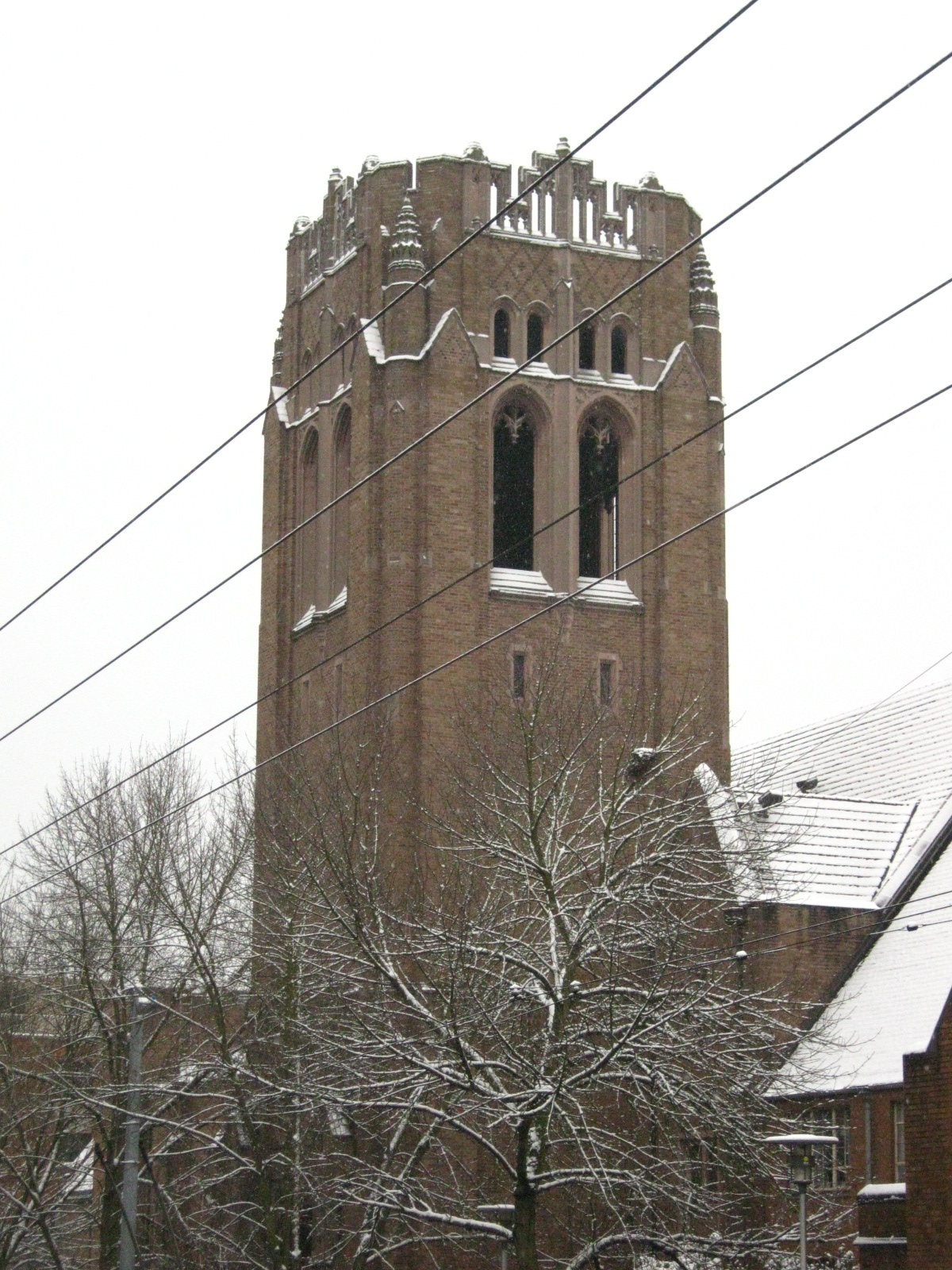
Photographic evidence of my Thanksgiving. My reading material (more to come on that subject very soon), more snow photos, and pumpkin pie.
A couple of links:
Libraries in literature quiz at the Guardian (at which I failed miserably).
Subscribe to:
Posts (Atom)
LinkWithin
